
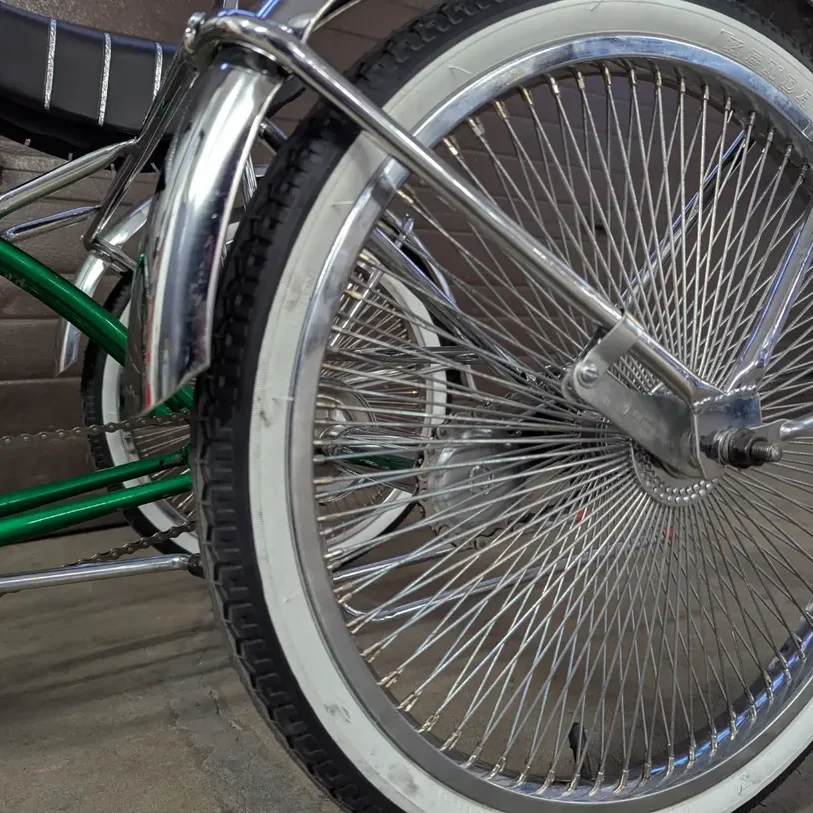
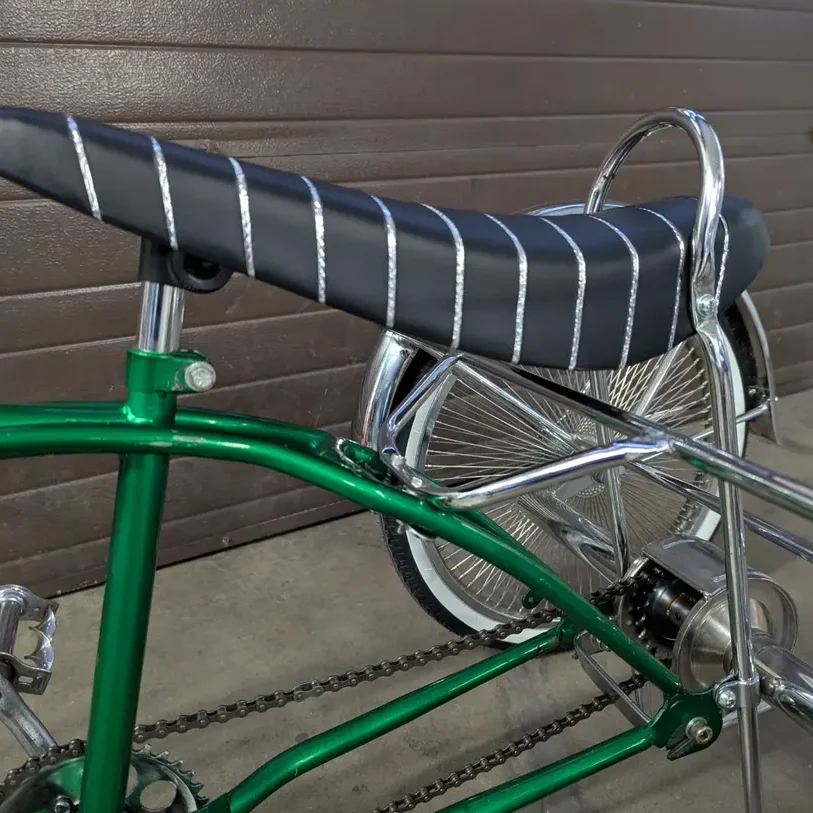
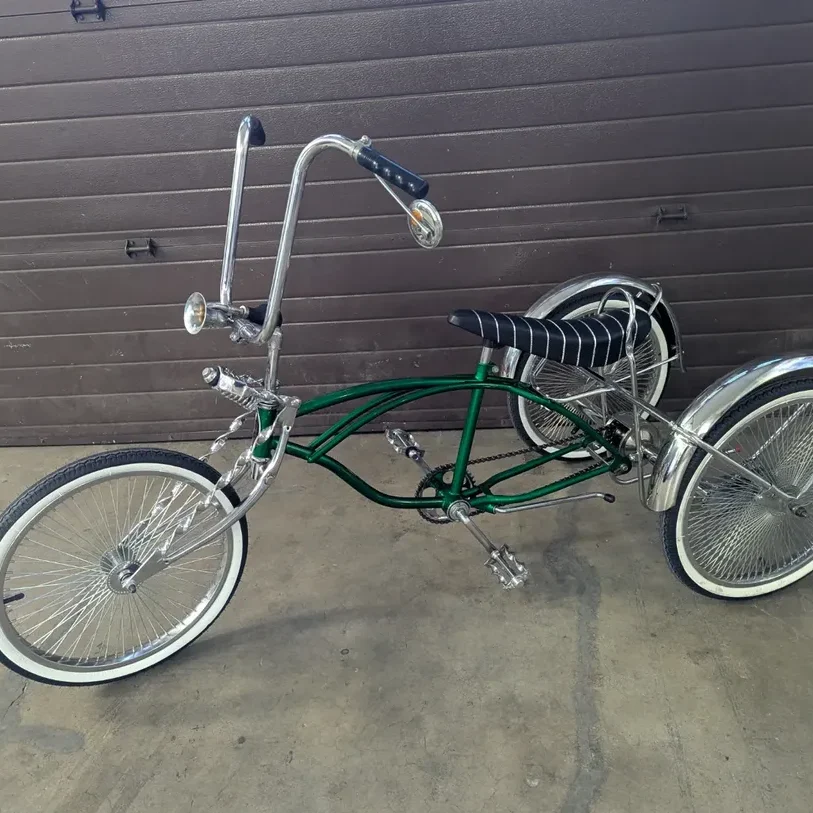
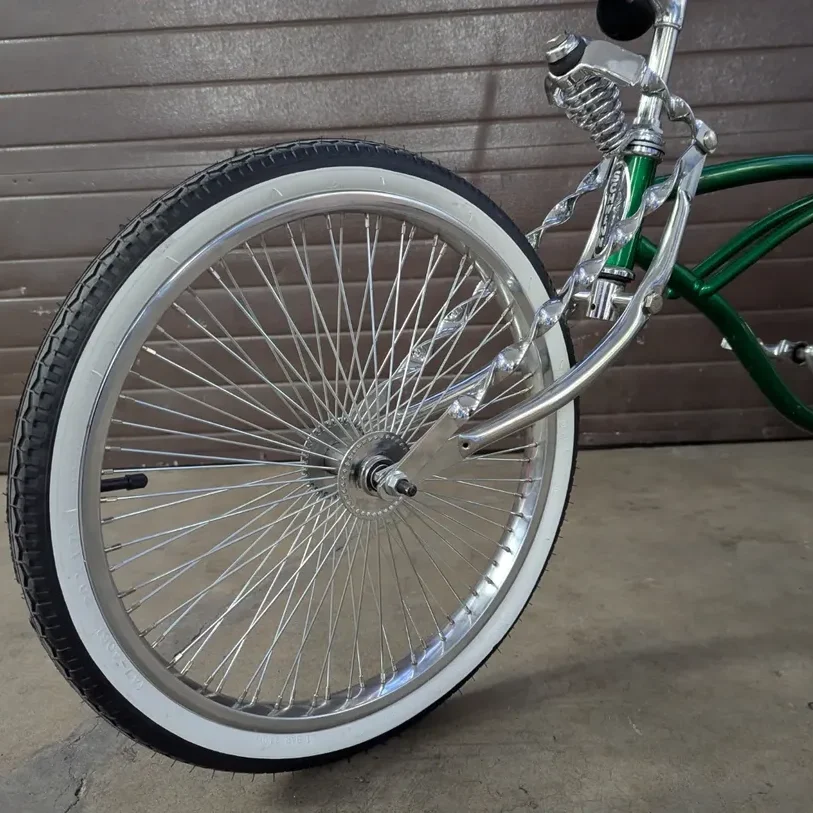
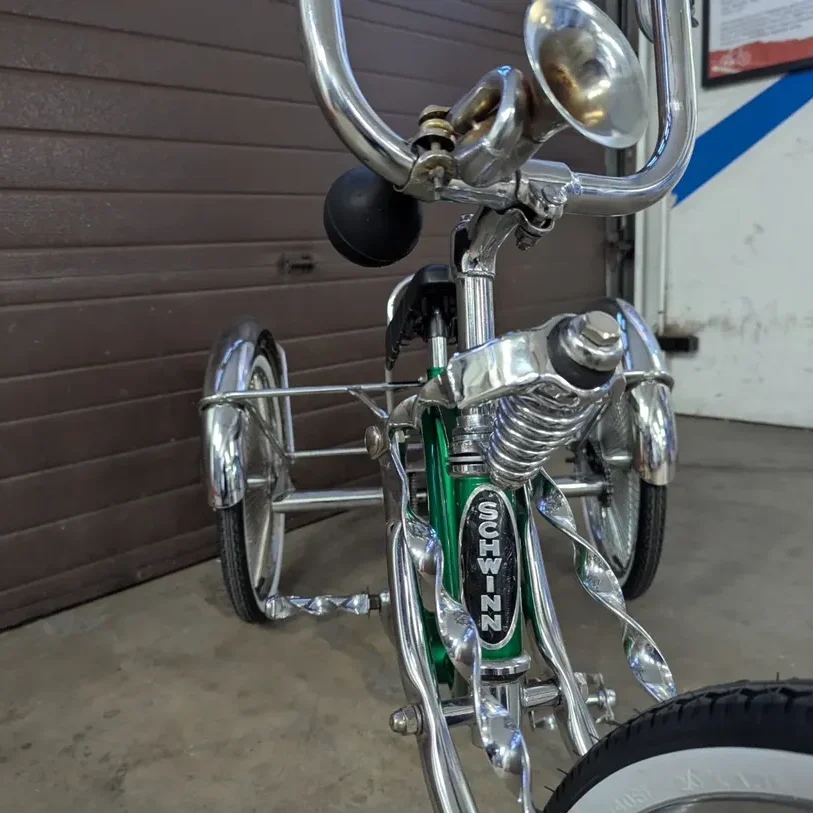
TTT-NT-WT: Schwinn Lowrider Trike. According to an article in Lowrider magazine, lowrider bikes originated in East L.A. and took inspiration from the famed car builder George Barris. HOWEVER, according to “The Godfather of Lowrider Bikes,” Joe Manny Silva, they originated in Mexico and were imported to California. There are also claims that they were a Pachuco thing.
The Pachuco/Pachuca style is very, very ill, so it does make sense. Pachucos were perceived as alien to both Mexican and Anglo-American culture—a distinctly Chicano figure. In Mexico, the pachuco was understood “as a caricature of the American,” while in the United States he was perceived as so-called “proof of Mexican degeneracy.” Mexican critics such as Octavio Paz denounced the pachuco as a man who had “lost his whole inheritance: language, religion, customs, belief.”
In response, Chicanos heavily criticized Paz and embraced the oppositional position of the pachuco as an embodied representation of resistance to Anglo-American cultural hegemony. To Chicanos, the pachuco had acquired and emanated self-empowerment and agency through a “stylized power” of rebellious resistance and spectacular excess.
Much attention was brought to pachuco culture in Los Angeles as a result of the Sleepy Lagoon incident of 1942, the Sleepy Lagoon trial that concluded in early 1943, and the Zoot Suit Riots of mid-1943. These incidents popularized a perception of pachuco culture centered on wearing zoot suits, juvenile delinquency, and a lack of patriotism.
There are relatively few sources documenting how participants of pachuco culture at the time characterized themselves. Based on research, one can learn that they were not unpatriotic, as many also served in the U.S. military before, during, or after their involvement with pachuco culture. In fact, as many as half a million Latinos served in the U.S. military during World War II, including some who were pachucos, and others who learned about pachuco culture from fellow Latino soldiers in the U.S. Armed Services.
- Tom Chapel