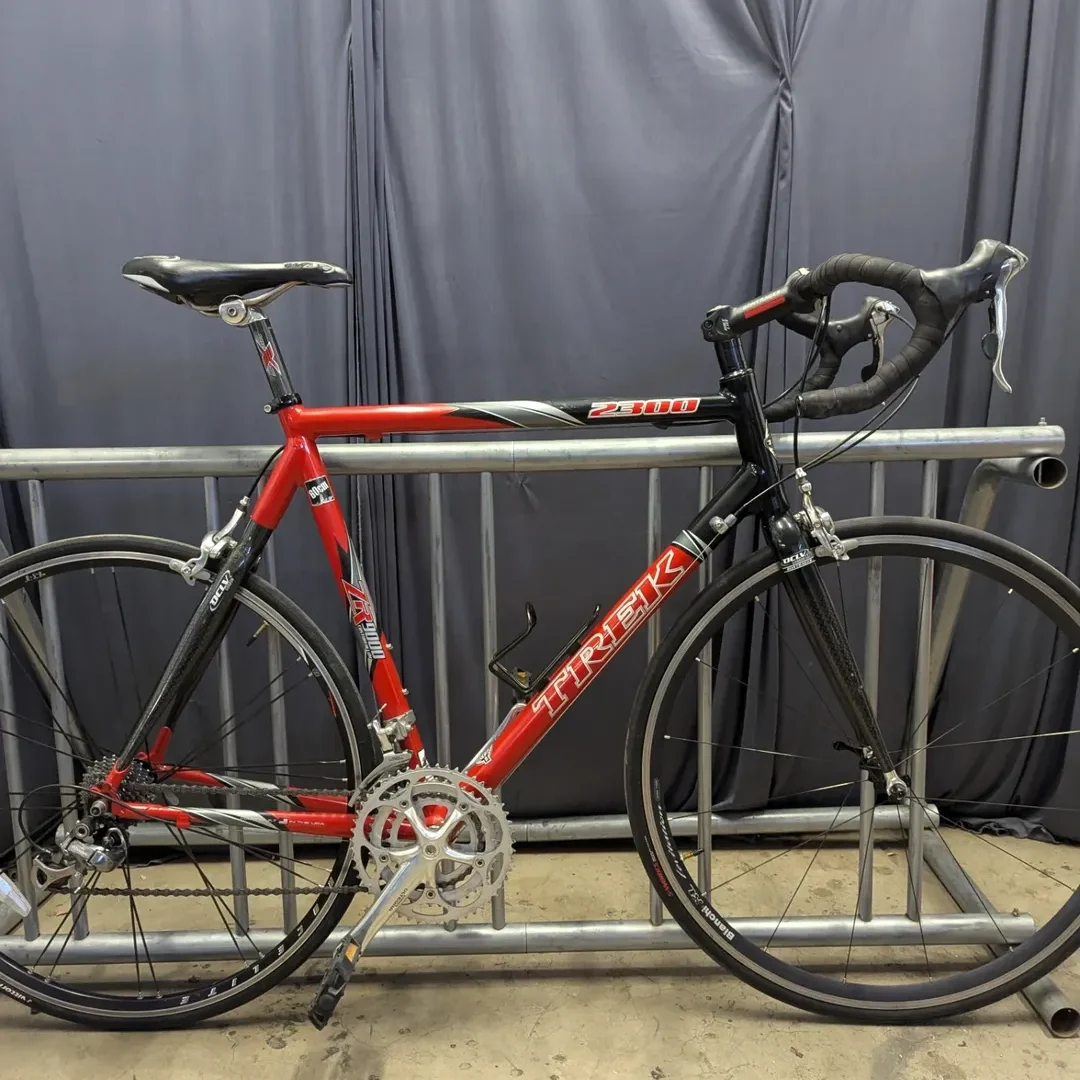
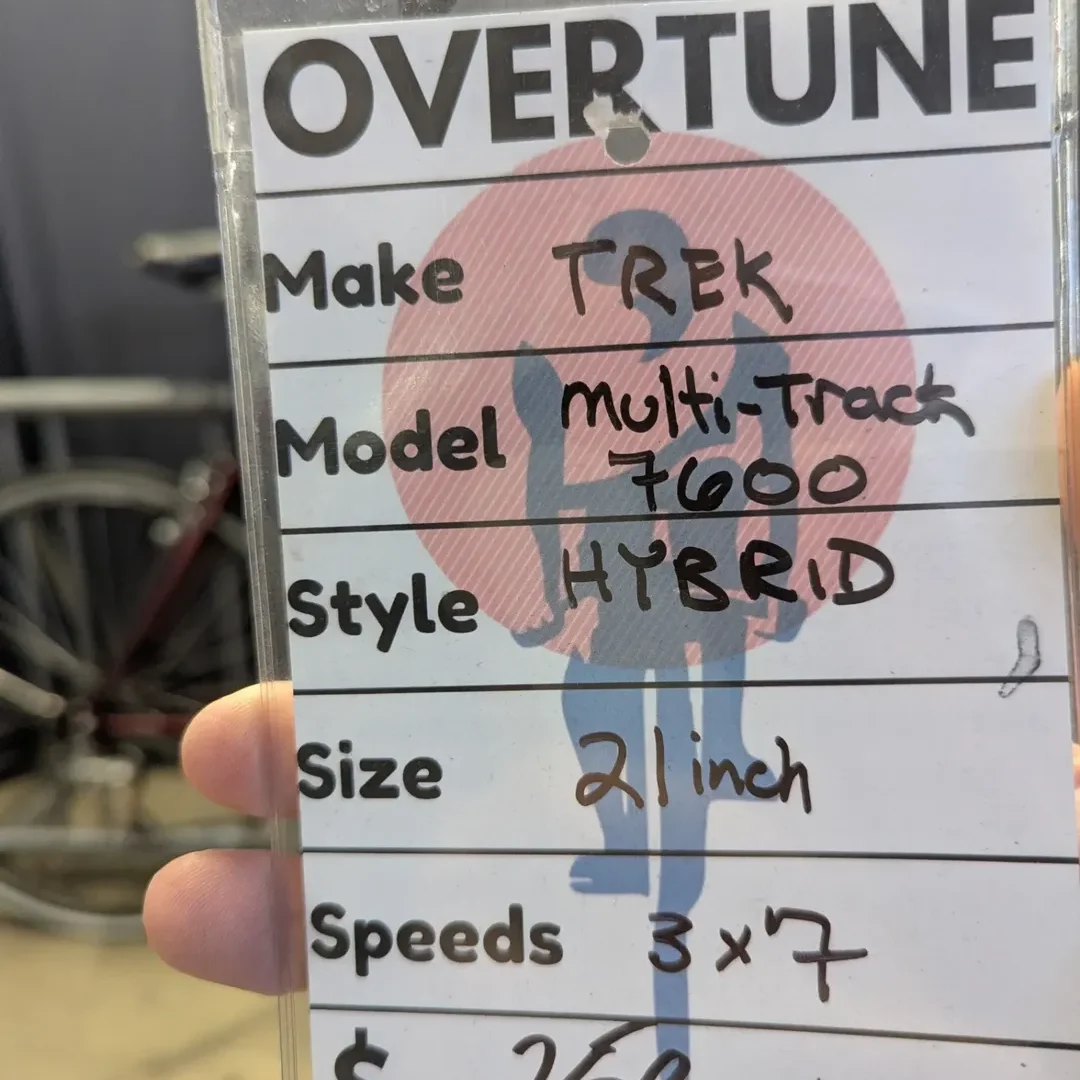

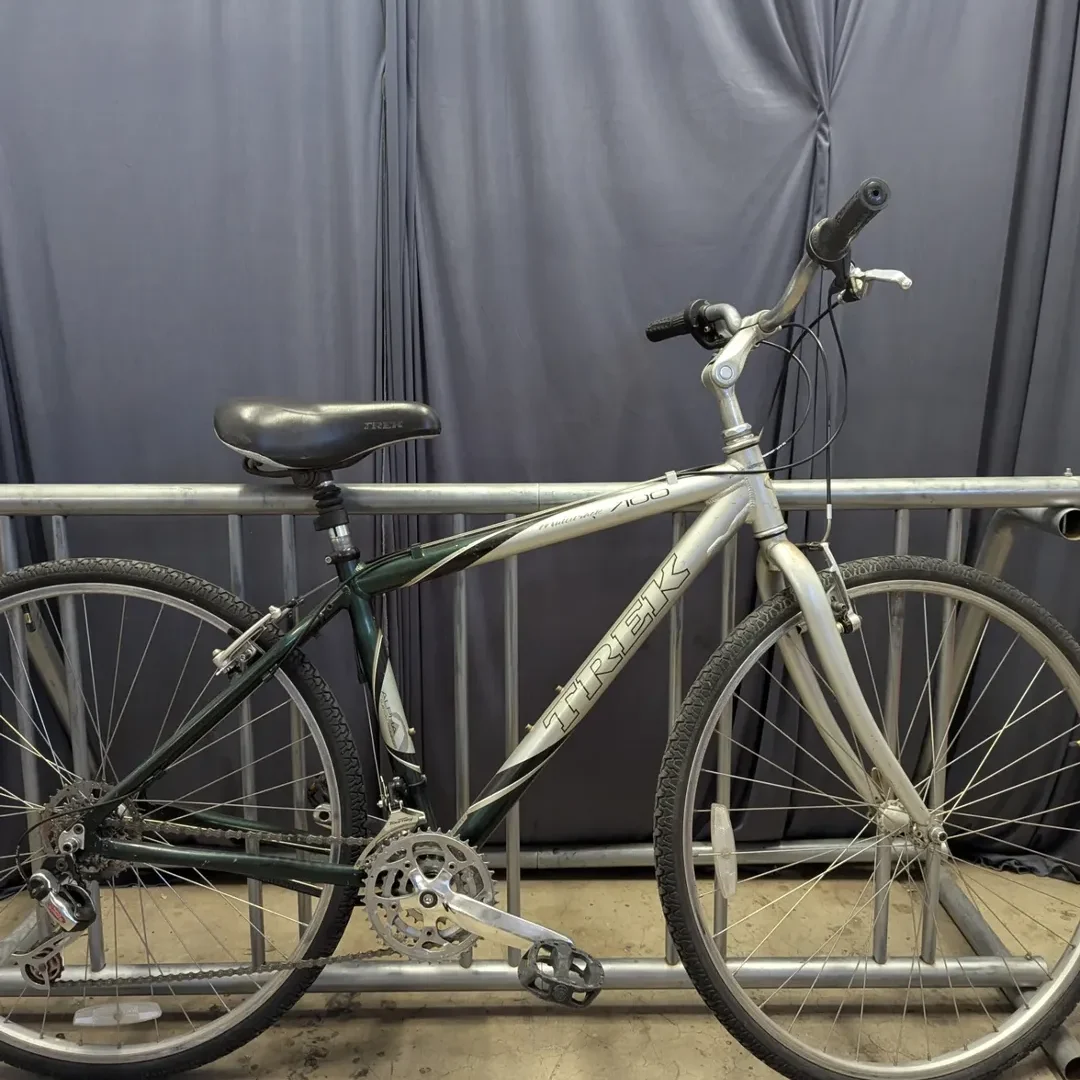


Tuesday Tommy’s Top-Notch Two-Wheel Transportation: TREKSGIVING!! This week, while I was wandering the floor looking for that illness, I noticed that we are sick with TREKs. I looked up “Treksgiving” to see if Trek was doing it, and the only thing I could find was about Star Trek. So, Peldor Joi to all of the Trekkies out there. You know who you are.
In December 1975, Dick Burke and Bevil Hogg established Trek Bicycle as a wholly owned subsidiary of Roth Corporation, a Milwaukee-based appliance distributor. In early 1976, with a payroll of five, Trek started manufacturing steel touring frames in Waterloo, Wisconsin, aiming at the mid- to high-end market dominated by Japanese and Italian-made models. Trek built nearly 900 custom hand-brazed framesets that first year, each selling for under $200. Later that same year, Trek Bicycle was incorporated.
In 1977, Penn Cycle in Richfield, Minnesota, became the first Trek retailer in the world. Within three years, Trek sales approached $2,000,000 in 1979. In 1980, Trek broke ground on a new 26,000 sq ft (2,400 m²) corporate headquarters on the outskirts of Waterloo. Company co-founder Dick Burke would later recall that “it wasn’t until we built the new factory that we became a business.”
And what a business they have become. Aside from the whole Lance thing, I would say they have done pretty well for themselves.
In the early days, Trek manufactured bikes in-house in Wisconsin, and in the mid-90s acquired the brands Bontrager, Gary Fisher, LeMond Racing Cycles, Klein, and Villiger Bikes, bringing some of that manufacturing in-house as well.
Nearly all Trek bicycle frames are currently produced in Taiwan, Cambodia, and China. Some of the high-end frames made in Taiwan are painted and have parts installed in Wisconsin as part of the Project One custom bike program, but no “production” Trek bikes are made in America at this time.
An important supplier is the Chinese company Quest Composite Technology, which also produces frames for the German brand Canyon.
- Tom Chapel